
Economy & Policy
12 articles

Inflation causes money to lose value over time. But that’s not always a bad thing. For borrowers and lenders, inflation has some low-key benefits. Find out what they are and how to take advantage of them.

Interest rates are rising once again. Will home prices fall as a result? The evidence is unclear. Learn more about the relationship between interest rates and home prices, and when rising interest rates might spell trouble for sellers — and opportunity for buyers.

While inflation wreaks havoc on your grocery bills and bond investments, it’s not all bad news for homeowners. But before you get too nervous or excited, ensure you understand how past periods of inflation have impacted homeowners — the good, the bad, and the ugly.

A 2019 study by Northwestern Mutual revealed some sobering statistics on consumer debt in America. It found that the average American adult has nearly $30,000 in debt, and that figure doesn’t even include mortgage debt. More shockingly, the study found that Americans spend over one-third of their income on debt repayment, on average. News stories about studies like

How does your income stack up against the average American’s? To answer this, you need to know the average income in America. As of 2020, the average U.S. wage was $55,628.60 and the median household income was $67,521.
People tend to think of “inflation” as a dirty word and a phenomenon to avoid. But a gradual increase in prices and wages over time is inevitable and — if kept in check — positive for the overall economy. What is inflation, what causes it, and what does it mean for you? Learn all about it here.

The Glass-Steagall Act was passed in 1933 to help prevent something like the Great Depression from ever happening again. Though other legislation has partially replaced it, it’s important to understand the law — and why many are calling for its reinstatement.

With each transaction you make, from working at your job to buying a quart of milk, you’re part of the market. Your actions affect the market as a whole, helping to determine the price others will pay for goods and services. But what is a market economy really, and how does it work?
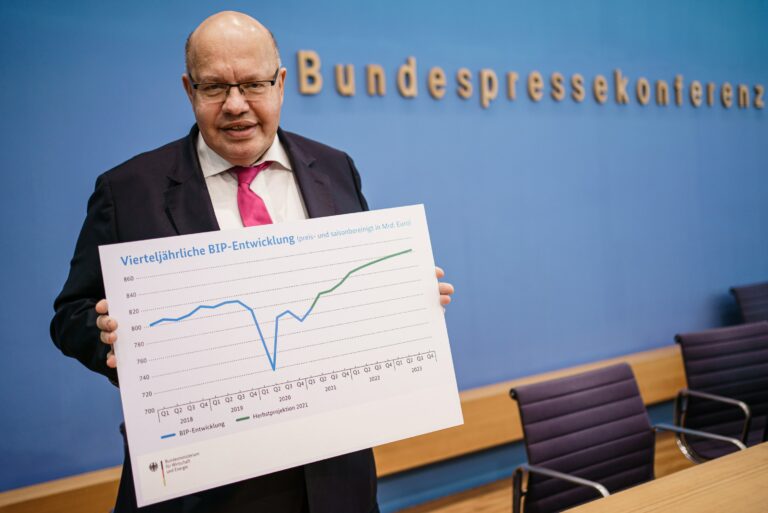
Gross domestic product (GDP) is one of the most common measures of the economy for any nation. It is an important calculation but doesn’t always tell the whole story. Read on for a primer about what gross domestic product is, how it’s calculated, its limitations, and why GDP should matter to you.

Are you starting to notice that many of your favorite brands’ offerings are getting smaller — without a change in price? That’s called “shrinkflation,” inflation’s stealthier cousin. Find out how it works, what causes it and how to avoid it.
Standard and Poor’s (commonly known as S&P) is one of the most prominent financial intelligence companies in the world. S&P is a division of the McGraw-Hill Companies and has more than 150 years of experience providing financial services to investors worldwide. Though the firm provides a number of financial research services, they are most widely known for

All federal credit unions operate under the supervision of the National Credit Union Administration (NCUA), a federal agency charged with regulating their activities and protecting individual members’ deposits. Learn about the NCUA and its functions to protect consumers.